

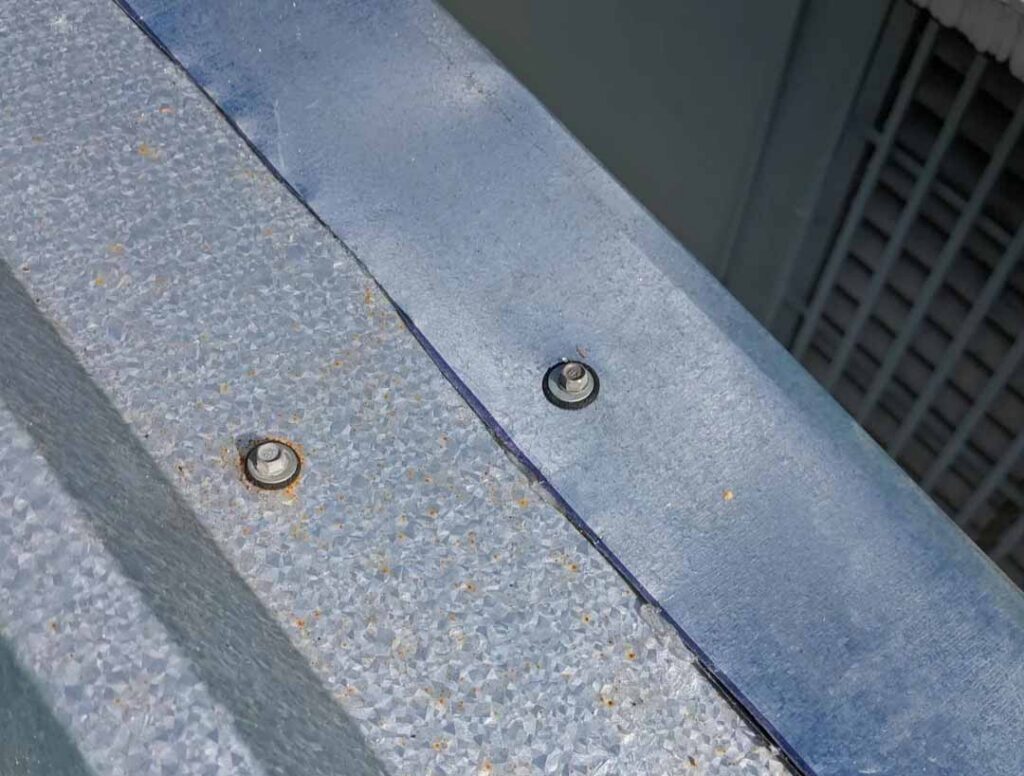
A small rust mark on a metal roof can be easy to dismiss. The roof is still keeping the rain out, the affected area might only be a few centimetres wide, and it does not look urgent from the ground.
The difficulty is knowing whether you are looking at minor surface deterioration or the beginning of a problem that will continue spreading.
We work with metal roofing across Christchurch and Canterbury, so corrosion is something we take seriously. Metal roofs are durable, but coatings, fixings, flashings and cut edges all need to remain in good condition if the roof is going to keep performing properly.
Why Does A Metal Roof Start Rusting?
Modern metal roofing is protected by coatings designed to shield the steel underneath. Corrosion generally begins when that protection is damaged, worn or repeatedly exposed to conditions that encourage deterioration.
Common causes include:
- scratched or damaged coatings
- moisture trapped beneath debris
- ageing cut edges
- worn or corroded fixings
- poor drainage
- incompatible metals coming into contact
- salt and other airborne contaminants
- ageing flashings and gutter junctions
The roof does not usually rust evenly. Certain areas are far more vulnerable than others.
Check Fixings And Cut Edges First
Fixings are small, but there are plenty of them across a metal roof. As roofs age, deterioration can develop around screws and washers, particularly if moisture is able to sit around the fixing.
Cut edges can also become weak points because they expose parts of the roofing material that need correct detailing and protection.
These are exactly the kinds of localised issues we look for during roof repairs in Christchurch. Finding corrosion while it is confined to a small area gives you far better options than waiting until it has spread through the sheet.
Flashings, Valleys And Gutters Are Common Trouble Spots
Some parts of a roof naturally see more water than others.
Valleys carry concentrated rainwater. Flashings sit around roof junctions and penetrations. Gutters deal with everything that eventually leaves the roof.
When debris collects or water struggles to drain, these areas remain wet for longer. That creates an environment where corrosion can develop faster.
A rusty flashing may look like a small roofing defect, but if it develops a hole, water can start entering the building behind an otherwise sound roof.
Our article on Roof Flashings Explained looks specifically at why these relatively small roofing details can create significant leaks.
Coastal Christchurch Properties Need Extra Attention
Properties closer to the coast have another factor to consider: airborne salt.
Salt carried inland by coastal air can settle on roofing and accelerate deterioration, particularly in sheltered areas that rain does not naturally wash clean.
That means the roof section you see from the street may look fine while a sheltered junction beneath an overhang or beside a roof feature is slowly deteriorating.
Location should therefore influence both the roofing product selected and the maintenance approach. When we discuss residential roofing in Christchurch, exposure is one of the practical considerations behind material and coating selection.
Can You Simply Paint Over Roof Rust?
Painting over visible rust without understanding its condition is rarely a sensible long-term fix.
If corrosion is genuinely superficial, the affected area may be treatable depending on the roofing product and its condition. But once corrosion has significantly weakened the steel, applying another coating does not restore the lost material.
The first job is determining how far the deterioration has progressed.
Surface staining, pitting and perforation are very different problems. Once holes or substantial metal loss appear, the affected roofing or flashing will generally need a more substantial repair or replacement.
When Can A Corroded Roof Be Repaired?
Targeted repairs can make sense when:
- corrosion is confined to one small area
- most roof sheets remain in good condition
- one flashing or junction is responsible
- damaged fixings can be replaced properly
- there is a clear cause that can also be corrected
Repairing the visible rust while leaving a blocked gutter or drainage issue untouched only sets the same problem up to return.
When Does Corrosion Point Towards Re-Roofing?
The decision changes when corrosion is widespread.
If rust is appearing across multiple sheets, around many fixings, throughout valleys and flashings, or in several unrelated parts of the roof, repeatedly patching individual sections becomes harder to justify.
Older roofing may also have problems beneath the visible sheets, including ageing underlay or other components approaching the end of their useful life.
That is when re-roofing in Christchurch becomes worth considering. It allows the old roofing to be removed, the underlying roof condition to be checked and a new metal roofing system installed rather than continuing a cycle of repairs.
Deal With Rust Before It Becomes A Leak
Corrosion tends to be much easier to manage while the roof is still watertight. Once water has started getting through, you may also be dealing with damaged insulation, ceiling linings or timber.
If you notice rust, bubbling coatings, discolouration around fixings or deterioration around roof junctions, it is worth getting a closer assessment rather than waiting for the first leak.
The aim is simple: work out whether the issue is a small repair or the early warning that a larger roofing decision is coming.